Following last month's decision to cut back oil production, in which Ecuador was asked to curtail prodction by 27,000 barrels/day, Ecuador is stuck between a rock and a hard place. Ecuador is at the opposite end of the spectrum of an OPEC nation like Saudi Arabia. After the cut, Ecuador is producing 493,000 barrels/day. If prices do not rally, Ecuadorian oil minister Derlis Palacios has asked that Ecuador be exempt from any further production cuts. Ecuadorian oil production is marginal and pays for about 40% of the national budget. Any further cuts may seriously impact the nation's economy. However, Palacios did rule out leaving the cartel altogether over the matter.
OPEC President Chekib Khelil said yesterday that if oil prices do not rally in response to the 1.5 million barrel/day cutback that OPEC agreed to in their last meeting, more cuts in production will follow. Khelil expressed that he hopes the recent cut will bring prices up and stabilize the oil markets in such a way that is suitable to both oil exporting nations and consumer nations. Unfortunately, the global economic crisis has not been kind to oil prices as they have still been on the decline. Accroding to Khelil, OPEC will most likely continue cutting production in order to maintain a balance between supply and demand through the beginning of 2009. Further decisions regarding production policy will be made at OPEC next meeting in Oran, Algeria on December 17, 2008.
The International Energy Agency, which advises nations energy policy, stated that supply shortfalls that sent oil prices sky-rocketing earlier this year are far from resolved and may yet lead to another period of triple-digit oil prices. Furthermore, daily world oil consumption is expected to rise 10 million barrels/day over the next two decades. The IEA predicts that daily global oil consumption will be at 106 million barrels/day by the year 2030. Most of that oil will be held by OPEC countries, who hold over 45% of the world's known oil reserves. The agency stated that the problem lies not in having enough oil, but being able to access the oil in time to meet the growing demand. The IEA stated that, "Globally, oil resources are plentiful, but there can be no guarantee that they will be exploited quickly enough to meet the expected consumption growth." Even if we are somehow able to meet the consumption growth, we must still consider the fact that we must drastically cut our carbon emissions or face grave circumstances from global warming. According to the IEA's annual World Energy Outlook, (Authors Note: The IEA's WEO is a very interesting read, I highly suggest you take a look. The Executive Summary is available for free online at the link above.), "The future of human prosperity depends on how successfully we tackle the two central energy challenges facing us today: securing the supply of reliable and affordable energy; and effecting a rapid transformation to a low-carbon, efficient and environmentally benign system of energy supply.” See the article here. -V
With all the financial woes facing the world today and steeply declining oil prices, it may seem like an odd time to invest in oil, but in an effort to prop up the global oil market prices, the United Arab Emirates is doing just that. The recent decline in oil prices may be setting the stage for a steep jump in the near future. Since early October, American oil consumption has fallen by an estimated 2 million barrels/day, and global daily consumption may fall next year for the first time since 1991. Abroad, oil demand is falling and car sales around the world are decreasing enormously. OPEC has tried to stabilize markets by cutting production by 1.5 million barrels/ day beginning November 1, 2008, and another cut may soon be on the way. While oil prices are falling, production costs are also falling, but not enough to outweigh the strain of $50/barrel. prices. With all the cuts in production, if demand begins to rise again, the price of oil will have to rebound to this summer's record prices in order to stimulate supply. Good news for investors in the long run, hard luck for consumers.
Barack Obama won the race to become the 44th President of the United States of America. In the spirit of the election and the subject matter of this blog, I thought it would be important to familiarize myself and readers with President-Elect Obama's stance on energy issues. Below is a link to the offical Barack Obama website in which he outlines his Comprehensive New Energy for America Plan. In it, you will find Obama's plan to eliminate oil-imports from the Middle East and Venezuela over the next 10 years, plans for renewable energy and "green-collar" job creation, and much more. Enjoy!
Despite OPEC's recent agreement to curtail oil production by 1.5 million barrels/day, Saudi Arabia has yet to inform any of its customers of any cuts or decreases in November's oil supply. Saudi Arabia is notorious within OPEC for often going to great lengths to ensure that world markets remain well supplied and prices remain low. According to trade sources in Europe and Asia, Saudi oil supply will not be cut in the November and may stay at full production through December. As far as the production cuts are concerned, OPEC president Chakib Khelil told Algerian radio that the kingdom was key to OPEC's success and warned that prices could be affected if the world's biggest oil exporter took its time over the cuts. We will have to wait and see if the Kingdom decides to play along with OPEC's plan to put a floor under the dropping price of oil.
Despite OPEC's recent declaration the oil production would be reduced, Saudi Aramco, (Saudi Arabia's nationally owned oil company and the world's largest producer of oil), remains committed to increasing oil production. Saudi Aramco's CEO Abdullah Jumah has stated that the oil company will increase production from 9.4 million barrels/day to 12 million barrels/day by the end of next year. The company also plans to remain a top supplier to the Asian market. The biggest challenge facing Saudi is decreasing global demand for oil. However, Saudi Aramco's Public Relations department manager Emad Al-Dughaither said, "We see long-term growth potential. After 75 years of experience in delivering energy, we know that the cycles exist and we know how we weather the cycles."
At the 2008 Oil & Money Conference in London, OPEC officials warned that recent, sharp falls in oil prices as well as the global economic crisis is leading to decreased investment in oil project. In the long term, this could result in shortages. With respect to the last 6 months, during which time oil prices have seen record highs and sharp declines, its not hard to see why investors are shying away from oil. Investors do not have confidence in the stability of the oil market and are scared to put their money in. This creates a situation in which development projects can not be financed and must be sidelined which in turn leads to a shortage of supply down the road. According to Nabuo Tanaka, head of the International Energy Agency, "We need investment now or a supply crunch may come in again but in a more acute way." In order to combat this, the entire energy industry must set aside short-term windfall profits in favor of a more sustainable, long-term plan aimed at stabilizing oil markets worldwide.
In response to the fact that despite OPEC's recent production cut oil prices are still falling on the markets, OPEC Secretary General al-Badri says that oil markets still need time to adjust to the production cuts. However, al-Badri also warned that if prices do not begin to rise soon, more action will be taken. Wild fluctuations in oil prices have driven many investors away and that is leading to delays and cancellations in many development projects. al-Badri stated that these fluctuations are not good for producers, investors, or consumers in the short and long terms. OPEC's decision to cut production has drawn criticism in the wake of the current global economic crisis, but al-Badri stated that, "we can not bail you out." In the near future, oil prices will have to stabilize or OPEC will probably decide to cut production further.
OPEC Secretary General Abdalla el-Badri has stated that OPEC is still concerned over the fall in oil prices even though OPEC members just recently agreed to cut production by 1.5 million barrels/day. el-Badri also said that another emergency meeting of OPEC representatives may be called to address the issue before the scheduled December OPEC meeting in Algeria. el-Badri went on record saying that if oil prices dipped below $70/barrel, all future energy projects would be in jeopardy and called on other large non-OPEC producers like Russia and Mexico to cut their production as well. The biggest cut will come from OPEC kingpin Saudi Arabia, which will trim output by 466,000 barrels/day. The Kingdom, which raised supply unilaterally by around 500,000 barrrels/day between June and August this year to meet what it said was higher demand from its customers, already has implemented some cutbacks as demand subsided. The volatile global economic crisis is certainly hurting the oil market and OPEC is committed to stabilizing oil prices.
There has recently been much said about the possibility of Russia joining the OPEC oil cartel. According to Qatar's oil minister Abdullah bin Hamad Al-Attiyah, Russia's presence in OPEC would greatly add value to OPEC. He stated that, "Russia is the second largest oil exporter, (behind Saudi Arabia), and as such have a strong role in world oil markets." While Russia has supported cooperation, there is little chance they will seek full membership. Considering OPEC's recent penchant for quotas and strict limitations, Russia really has nothing to gain from a membership in OPEC. As Eric Watkins, author of this article states, the Russians will most likely continue saying "Nyet."
Facing steep declines in oil prices, (over 57% drop since July), OPEC member nations met in Vienna to discuss their options. After all was said and done, OPEC members agreed to reduce oil production output by 1.5 million barrels per day and suggested that more drastic cuts were to come. OPEC President Chakib Khalil said, "...there will definitely be another cut... this is a crisis situation." Some OPEC members like Iran and Venezuela were pushing for far more drastic cuts in production to ramp up prices, while other members, (with western allies), like Saudi Arabia pledged to keep markets well supplied in the face of the economic crisis. Saudi Arabia has repeatedly said it "does not want to add to the world's economic woes by pushing up oil prices." Cartel members stated that they would be happy to see a price band between $80 and $90 per barrel. In the past, some OPEC nations, most notably Saudi Arabia, have ignored production quotas but President Khelil said this time would be different. Khelil said, "Unless they meet their commitments, they will be worse off than they are now. The market is going to test whether we are committed."
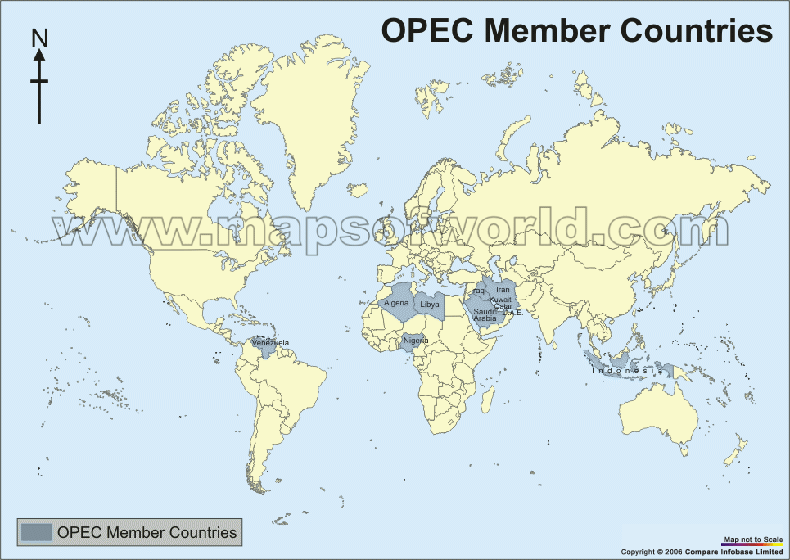
In order to discus the financial crisis, the conference of Organization of the Petroleum Exporting Countries meet at OPEC headquarters in ViennaAustralia.The convention recognized that this world economical crisis has already reflected upon demand for energy linking oil a priority matter.OPEC leaders noted that oil prices have fallen placing in jeopardy the current alternative projects and potentially resulting in “a medium-term supply shortage.”Given the circumstances the Conference will continue to provide for consumers although they have decided on a production ceiling. OPEC producer countries will reduce their28.808 million barrels a day output by 1.5million barrels per day.This will be effective November 1, 2008 with allied member countries commitment to only reduce their supply by that agreed amount.The convention recognized the Organization’s commitment as a supplier but called on non OPEC producers and exporters to continue contributing in efforts to restore equilibrium.
Country: Decrease (b/d)
Algeria: 71,000
Angola: 99,000
Ecuador: 27,000
I. R. Iran: 199,000
Kuwait: 132,000
Libya: 89,000
Nigeria: 113,000
Qatar: 43,000
Saudi Arabia: 466,000
U.A.E.: 134,000
Venezuela: 129,000
OPEC Secretary General Abdalla Salem el-Badri predicted that if oil markets were not brought into balance, there would be a huge oil surplus in 2009. And while OPEC is doing its best to stabilize the market, it can not do it alone. OPEC's President Chakib Khelil has asked that other non-OPEC countries reduce their output in order to help stabilize oil prices. He called on Russia, Norway and Mexico to aid in reducing production outputs. All of this come amid sharp criticism from Great Britain's Prime Minister Gordon Brown who claims that taking measures to raise oil prices would be devastating in the midst of the world financial crisis. Badri replied by stating, "We cannot bail out the financial crisis created by Mr. Brown and others in the United States... If Mr. Brown is truly concerned for his citizens, he should look into the taxes he imposes... I have no doubt everybody will be affected by this financial crisis." During his announcement, Secretary General el-Badri was in Moscow discussing a possible proposal for cooperation between OPEC and Russia.
According to Merrill Lynch's quarterly report on the Middle East region, Saudi Arabia and other Gulf oil producers in the region are "well placed to weather the sharp decline of oil prices." While other Middle Eastern oil producers may need a higher price threshold, Saudi Arabia could handle prices as low as $30.00/barrel. In its previous quarterly report, when oil prices were hitting record highs between $135-$150/barrel, Gulf oil producing countried like Saudi Arabia, Kuwait, Oman, Bahrain, Qatar, and the United Arab Emirates were able to achieve a current account surplus of over $1 billion per day. In light of the recent economic crisis, these countries will have to fall back on profits saved and accumulated in recent years for just such an occasion. Merril Lynch's report defined just how low a price each country could handle while still maintaining current budget spending. Saudia Arabia's breakeven oil price was the lowest at $30/barrel, on the other end of the spectrum, Kuwait could only really afford prices as low as $75/barrel. All but two of the nations reported on in the Merrill Lynch quarterly report are members of OPEC, and along with Iran, Saudia Arabia, Kuwait, Qatar, and the UAE account for over 60% of the world's known crude oil deposits. It will be interesting to see how OPEC handles the situation in their upcoming extraordinary meeting. See the article here with Lexis Nexis Access. OR See a copy of the article here. -V
Fears of a world-wide economic crisis have pushed oil prices down over 50% since they hit their all time highs in July of 2008. Many OPEC member have stated that they would like to see production cut in order to stabilize oil prices. For example: Iran has the second largest oil reserves in the world, and for every dollar the price of oil per barrel falls, Iran loses about a billion dollarsof oil revenue.Also bearing in mind that OPEC comprises 13 of the world’s largest oil producers, Algeria Iran and Venezuela have publicly stated that they would like to experience an output cut so to help rise prizes.Algeria’s energy minister hoped that the advancement of the OPEC meeting by three weeks should announce the “substantial” cuts.Most analysts are in agreement that this cut would be done by cutting production of about one million barrels a day.The results of this cut down on oil production could result in higher prices and more potential harm to the economic slow down.
Hello readers, We'll be taking a one week break from our postings for the week of October 12th to the 18th. Our Postings will resume on the 19th of October. Thanks!
As the stock market took a huge hit, the price of oil also fell dramatically, reaching its lowest point in over a year. US light crude fell $8.89 to settle at $77.70 per barrel, and London Brent Crude fell $8.57 to settle at $74.09. The huge fall in oil prices came as the International Energy Agency cut back future demand estimates amid global recession. Many representatives from OPEC member nations have called for a stop to the falling oil prices. When interviewed, Abdullah al-Attiyah, the Qatari oil minister, told Al Arabiya television that oil prices faced a "huge decline" unless Opec moved quickly to counterbalance the volatile economic situation. OPEC has already cut production once last month in an attempt to stabilize fluctuations in oil prices, but will meet later next month to discuss the course of action to be taken. John Waterlow at Wood Mackenzie, a mineral and energy research and consulting firm explains that, "OPEC is in a cleft stick: they want to protect revenues but still be sure people do not permanently decrease their demand."
British Prime Minister Gordon Brown appealed to the OPEC cartel this past Friday claiming that cutting oil production would only hurt the world economy during this period of global economic crisis.He called on the leaders of OPEC to be responsible for adjusting oil prices and demanded they act ‘statesmanlike’ to help the rest of the world by assuring a stable price reduction on oil.On the contrary, the members of OPEC worry the financial crisis will result in global shutdown on the demand of crude oil.Members of the Arab-dominated oil-producing organization are worried about the impact of the international financial crisis and global economic slowdown on demand for crude. The Paris-based International Energy Agency said Friday that the slowdown is already cutting into global demand for oil, as leading industrialized economies face being plunged “into outright recession.” Libya’s oil minister Shukri Ghanem said on Thursday that oil-producing nations should ‘look after their interests’ and called for ‘a reduction in output to respond to the fall in income’ resulting from lower oil prices.
Amid economic downturn following the world financial crisis, Venezuela is losing billions of dollars in oil revenue to keep motorists happy. While Venezuela boasts the world's cheapest gasoline, ($0.14 per gallon), the steeply rising demand for gasoline and more than 43% rise in car sales is costing the country more than 9 billion dollars annually by conservative estimates. While consumption of oil for gasoline and energy production has increased, prices have remained the same, (approximately $8.18 per barrel compared to $96.12 for the same barrel overseas). Hugo Chavez, who is notorious for criticizing American energy demands, is faced with the dilemma of domestic consumption reducing profits. Chavez claims his administration will make natural-gas fueled cars available next year. However, in order to avoid deficits in the near future, Venezuela may have to reconsider its subsidized gasoline program and begin selling oil domestically at market prices.
OPEC leaders announced today that they will hold an emergency meeting session on November 18, 2008 in Vienna, Austria. The emergency meeting was called in response to the growing financial crisis and its impact on oil in world markets. OPEC members last met on September 9, 2008 and agreed to leave production limits unchanged while reining in oversupply. The next meeting was not scheduled until December 2008, but OPEC's Vienna secretariat released a statement on behalf of the cartel stating that, "In response to growing unease, OPEC will meet November 18, 2008 to address growing unease in global oil markets. The purpose of the meeting is to ensure that oil market fundamentals are kept in balance market stability is maintained." While no official planes have been released for the meeting, Qatari oil minister Abdullah al-Attiyah said a supply cut is indeed a possibility. At the meeting, Venezuela, the world's 9th largest oil producer wants OPEC to adopt a system of price bands to stem wild fluctuations in oil prices.
According to the United States Energy Information Administration's latest Short-Term Energy Outlook, demand for OPEC crude oil will exceed OPEC's actual output over the next six months unless the global economy is weaker than expected. Higher oil production in Saudi Arabia during summer 2008 combined with the demand response to extremely high prices and recent credit market problems that point to a lower trajectory for the world economy and oil consumption growth are currently reinforcing the sentiment of a loosening in the global oil balance. As a result, the recent supply disruptions in the Gulf of Mexico have not resulted in the kind of price increases that would have been expected had they occurred earlier in the year. However, unless the global economy is weaker than anticipated, the EIA expects that the call on OPEC's crude oil will exceed OPEC crude oil production over the next 6 months. This market balance and the relatively low level of Organization for Economic Cooperation and Development commercial oil inventories suggest some upward pressure on prices. However, if non-OPEC oil production increases as expected during 2009, oil price pressures would then moderate. What it really comes down to is the role Saudi Arabia plays in oil production over the next six months and their goals in terms of oil production.
As the leader in both world oil reserves and oil production, (and by that right the most powerful member of OPEC), Saudi Arabia is one of the few members of the OPEC oil cartel that constantly battles to keep prices low. Although OPEC often sets production limits to cut supply and raise prices, Saudi Arabia often ignores those limits and increases production to meet world demand and keep prices low and customers happy. While this may seem to fly in the face of conventional wisdom, (considering Saudi Arabia has the largest supply of one of the most sought after goods in the world), there is a reason behind their determination to keep prices low. The problem with keeping prices high is that it hurts consumption of that good. Saudi Arabia's entire export economy is centered on oil, and if oil gets too pricey, people are going to be searching for alternatives to replace oil and Saudi Arabia will find itself in serious economic trouble. Other OPEC countries such as Iran and Venezuela don't have nearly as much oil in the ground or money in the bank as Saudi Arabia does. Their main goal is to maximize profits. These diametrically opposed perspectives on the oil market have created a lot of friction within OPEC. Most recently, Saudi Arabia flew in direct opposition to OPEC when they announced a cut back in production on September 9, 2008, of more than half a million barrels per day. In response, Saudi Arabia increased its production to satisfy the world markets. When OPEC members get hungry for profits and decide to scale back production, Saudi Arabia is the nation that is able to balance the scales and keep oil prices in check. See the article here with Lexis Nexis Access. OR See a copy of the article here. -V
In the past decade, oil production in Indonesia has declined by nearly 50%. Rising local demand and bureaucratic red tape faced by oil companies have turned this once exporting nation into a net importer of oil. Indonesia's current production is only at about 850,000 barrels per day, a far cry from the 1.5 million barrels it was producing daily in the 1990s. Production has fallen off so much the OPEC agreed to suspend Indonesia's, (the sole Asian OPEC member), 46 year long membership on September 10, 2008. The end of Indonesia's membership in OPEC was a long time coming because it has not been able to meet production standards and as a net importer of oil, rather than an exporter, it no longer made sense to stay on. Large new taxes, natural barriers to oil reserves, and difficult oil laws have discouraged investors from exploration and production. Mr. Anthony Nunan of the Mitsubishi Corporation in Tokyo explained that, "If Indonesia was willing to explore and drill new areas offshore, let international companies in, and make fiscal terms better, there would be an improvement in the situation. However, it will not be a large increase, it will be a marginal increase."
As the American Dollar strengthened against the Euro, oil prices fell by $2. The decline results from investors buying heavily in commodities to defend the strength of the dollar and use the commodity stocks as a hedge against inflation. But as the currency strengthens, investors sell the commodities and return to the Dollar. Also, recent data show that American fuel demand is falling while supplies are growing. The Energy Information Administration reported that crude oil stocks rose by 4.3 million barrels, (1.5%), and gasoline inventories rose by 900,000 barrels, (0.5%). At the same time however, fuel consumption for the four-week period ending September 26, 2008, was only about 19 million barrels/day, down 7% from the same period last year. Jonathan Kornafel, the Asia Director for Hudson Capital Energy in Singapore predicted that oil would be traded between $80 and $90 dollars per barrel over the next few months due to falling demand. However, he also warned that if prices do dip below $80 per barrel, OPEC would certainly take action to stem the tide of falling prices.
After months of record-high oil prices that crippled airlines and automakers, drove up gasoline and food costs, and thinned out wallets across the land, American consumers now have a reprieve from the battery. The recent decline in oil prices is expected to put billions of dollars back into consumers' wallets and help the shaken economy. Ben Bernanke, Chairman of the Unitd States Federal Reserve, referred to the decline in oil prices as a "positive note" in a recent address to Congress. Although American consumers are happy with decline, oil producers in foreign nations are feeling the effects of the decline in prices. Mexico may have to cut its budget for next year following the drop in petroleum revenues, and countries like Venezuela and Russia may be forced to scale back enormous energy projects that require enormous funding. While OPEC has said it will step in and try to scale back declines in price by cutting production, its most powerful member, Saudi Arabia wants to keep oil below $100 per barrel. Whatever action OPEC takes, weaker global growth and demand are likely to keep prices relatively low. “The fall in oil prices is equivalent to a new stimulus package for consumers,” said Lawrence J. Goldstein, an energy analyst at the Energy Policy Research Foundation. Goldstein calculates that each drop of $10 a barrel in the price of oil lowered the nation’s annual bill by about $70 billion. That is $230 for every American.
According to Nobuo Tanaka, the Executive Director of the International Energy Agency, if OPEC production of crude oil remains stable at its current level, world oil prices are likely to decline in the short-term. However, Tanaka was not quite as optimistic for the medium-term. His concern lies in the lack of new oil production capacity coupled with emerging economies' demand for oil expected to rise. While demand for oil has decreased in the United States and Europe, demand is constantly rising in India and China. OPEC agreed to leave its crude output limits unchanged for now, but called for tighter production discipline which may result in a decrease in physical supply of up to 520,000 barrels per day. While a temporary respite from high oil prices is a welcome relief in the short-term, the lack of new production capacity possibilities make the outlook for the future more dismal. While growing economic markets increase the demand for oil, it is not clear where the supply will be available. See the article here with Lexis Nexis Access OR See the article here. -V
In light of the strengthening of the American dollar against foreign currency and worldwide turmoil in financial systems, oil prices have fallen almost 40% from their record highs set in July of 2008. But as oil falls, commodity experts predict the prices will bottom out at a relatively high level because of positive worldwide growth, oil demand, and OPEC's control over a vast majority of the world's oil. The International Energy Agency reports that although demand for oil has decreased in many markets, those declines are offset by annual growth in demand around 4% despite the high prices. Non-OPEC nations are faced with troubles arising from the high costs of oil production, skills shortages, and declining reserves. Other factors that must be considered are natural disasters such as hurricanes on the Gulf Coast of the United States, violence interrupting production as has been seen in Nigeria recently, and political tensions such as those between the United States and Iran. What this ultimately means is that OPEC will be largely responsible for supplying future oil growth considering it controls roughly 76% of global reserves. As of now, OPEC is responsible for 43% of the world's oil output, but with the aforementioned considerations, this will likely rise over time. OPEC has flexed its muscle recently in response to low oil prices and opted to reduce output to raise prices. Saudi Arabia however ignored the OPEC mandate to reduce output and instead increased its output to ring relief to the markets. OPEC has the leverage to control prices and their actions to date have suggested that they will not tolerate prices lower than $90 per barrel, and are more comfortable at above $100 per barrel. As of right now, the drop in oil prices will relieve costs of inflation and possibly stimulate more global growth. However, the future of oil prices will remain a relatively high one due to OPEC's massive influence over the global markets.
Amid much consideration on the issue of offshore oil drilling in the United States, House Democrats have abandoned the moratorium on offshore oil drilling which has been stood since 1982 and been renewed every year since. Ending the moratorium could potentially open up the outer continental shelf for oil and natural gas exploration for the first time in 26 years. The end of the moratorium is being viewed by Republicans, who have challenged Democrats over the moratorium in light of high gasoline prices, as a major victory, however it is a victory with a catch. Drilling and exploration can not begin for approximately another year which leaves the issue in the hands of the next President elected. David R. Obey, Chairman of the House Appropriations Committee stated that, "This will mean, quite frankly, that the result of the upcoming election will decide what our drilling policy will be." Senator John McCain, the Republican presidential candidate, is generally in favor of offshore drilling. Senator Barack Obama, the Democratic presidential candidate, is in favor of limited offshore drilling coupled with alternative energy initiatives. Environmental advocates from the Sierra Club, the oldest and largest environmental organization in the United States, have pledged to push to reinstate the ban next year.
Royal Dutch Shell, one of the world's largest oil companies has completed a multi-billion dollar deal with Iraq. They are the first foreign petroleum corporation to foster such a deal since the Iraqi oil industry was nationalized over three decades ago under deposed leader Saddam Hussein. Shell hailed the deal as a major step towards the stabilization of Iraq as a nation, but would still not disclose locations of its offices. A Shell representative also announced that a large force of guards were hired. The goal of the deal is to recapture gas that goes to waste during oil extraction. The recaptured gas will be used to fuel power stations and industrial sites. Crippling power shortages are a common occurance in Iraq, and this will hopefully ease the situation. Iraq's oil minister Hussain al-Shahristani praised the gas joint-venture which will be 51% owned by the Iraqi government, and 49% owned by Shell. See the article here. -V
Crude oil prices posted their largest ever one day gain today spiking more than $16 dollars amid concerns over the governments plan for bail-out of the financial system. Crude oil futures soared to over $130 per barrel before finally settling at $120.92 making a record one day gain of $16.37. Across the board, commodities have been strengthening as the dollar weakens against other foreign currencies. Commodities are being used as a currency hedge, and with the weakening dollar, prices for all commodities are rising. The government's proposed $700 billion bail-out of the financial system to buy out failed mortgages is sending investors to commodities in droves because commodities are generally seen as relatively safe investments. This surge in price comes amid a general falling of oil prices over the past few weeks, but it is evident the relief of those few weeks was short-lived.
Drivers in the Southern United States are facing a severe gas shortage due to production interruptions at refineries in the Gulf Coast following Hurricanes Gustav and Ike. Many gas stations in large cities like Atlanta, Nashville, and Tallahassee have completely depleted the gasoline stocks. Lines up to two miles long have been reported in Marietta, Georgia. Jason Toews, who operates a consumer advocacy website called www.Gasbuddy.com, states that the shortage is self-perpetuating. Toews states that, "when people hear about shortages, they rush to the pump which in turn leads to more shortages." The shortage could continue until Gulf Coast production is back in full swing, but until then, Toews advises drivers to remain patient. See the article here. -V
MEND militants in Niger have announced a cease-fire in their campaign against multinational petroleum companies working in the Niger Delta. MEND stated that the cease-fire precipitated after appeals from tribal leaders in the region. In their week long "oil war," MEND has severely disrupted oil production in the Niger Delta. The attacks forced petroleum giant Shell to declare force majeure on their contract. A force majeure is a common clause which frees all parties from contractual obligation in the case of an extraordinary event such as natural disaster or war. The Nigerian military and petroleum companies are taking the announcement witha grain of salt because this is not the first cease-fire of this type and only time will tell if oil production can remain at full tilt in Nigeria. See the article here. -S
After remaining well above $100/barrel for over six months, crude oil prices returned to triple-digits briefly before ending the day at $97.88. Recent hurricanes that battered the GulfCoast region of the United States and caused major disruptions in oil production have caused oil companies to dip into their reserve inventories. This use of crude reserves has caused stockpiles to their lowest level in years. In response to short term fuel shortages, the government may appeal to the International Energy Agency to release emergency fuel stocks. The IEA is a group that works to coordinate the energy plans of 27 industrialized nations. However, even without emergency stocks from the IEA, fuel shortages may be covered by refineries who are exporting surplus fuel supplies from Europe back to the United States. Other factors leading to the rise in the price of oil are the disruptions of oil production in Nigeria and the weakening of the American dollar against other world currencies.
See the article here . -V
In opposition to a Presidential veto, the House has gone forward and approved measures aimed at curbing speculation in oil and other commodity markets. The new measures will act like a watchdog group focused on hedge fund and large institutional investors. The measures will also allow for additional staffing at the Commodities Futures Trading Commission and would allow the CFTC to limit the stakes traders hold in certain commodity markets. The White House issued a statement explaining the President George W. Bush will likely veto the bill because, "there is no verifiable evidence that oil speculators were behind either the rise in oil prices or their recent decline." See the article here. -V
New legislation proposed and approved by a House vote of 236-189 is aimed at easing long-standing bans on offshore drilling while at the same time promoting development of alternative energy technology. According to the legislation, which has yet to be passed into law, oil companies would lose some tax benefits, utilities would be required to produce 15 percent of their electricity from renewable sources by 2020 and a ban on developing fuel from RockyMountain shale would be lifted. “We are opening up to 400 million acres off the Atlantic and Pacific coasts to drilling and expanding the availability of oil by at least 2 billion barrels,” said Representative Nick J. Rahall II, the West Virginia Democrat who leads the Natural Resources Committee. “And we have done so in a balanced, reasonable and responsible manner.” The proposal also creates a policy shift for the Democratic party who have sharply opposed offshore drilling since imposing a ban in 1982. The legislation has met with sharp criticism from oppponents who view the proposal as a mere political gimmick aimed at voters who are frustrated by sky-rocketing gas prices. Some critics claim that the proposal is a sham and the Democrats are only willing to consider lifting an offshore drilling ban because they're sure it will not be passed into law. Whether or not this proposal will be passed into law is yet to be seen, but if it does, the United States could tap some large, domestic oil reserves while developing renewable energy initiatives.
See the article here. -V
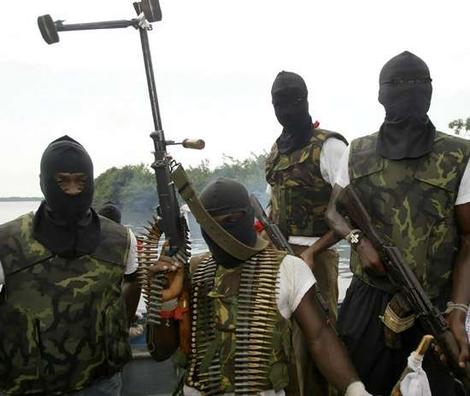
According to the New York Times Interactive World Oil Map, Nigeria is the 12th largest producer of oil in the world. This past weekend, MEND militants, (Movement for the Emancipation of the Niger Delta), began what they called an "oil war." They began their fight against multinational oil corporations by attacking multiple work stations in the Niger Delta and effectively reducing the area's oil output by as much as twenty percent. The militant force has claimed responsibility for kidnappings of oil contractors and blowing up oil pipelines. The Nigerian government depends heavily on income from oil revenues from the Niger Delta region, but the Niger Delta remains stricken by severe poverty and corruption. The MEND militants seek to rid their homeland of "oppression and exploitation" from large oil magnates such as Exxon Mobil.
Nigerian militants of the MEND, (Movement for the Emancipation of the Niger Delta), continued their attacks in what they are calling an "oil war." A security official who wished to remain anonymous quoted the death toll at over 100 people killed in the fighting. In the most recent attack on a Royal Dutch Shell flow station, MEND militants use heavy automatic weapon fire and dynamite during their siege which lasted over an hour. The MEND seeks to provide more local control over the vast amounts of natural resource deposits in the rich Niger Delta region and has vowed to continue the attacks until they have achieved their goal. The fighting continues to severely disrupt Nigeria's oil output.
Following the meeting of OPEC member nations in Vienna and their decision to decrease oil outputs by 500,000 barrels of oil per day, Saudi Arabian officials have assured world markets that they do not intend to abide and will not stem production. Saudi Arabia is by far the most powerful member of OPEC in that they control over 40% of the world's total oil supply. They, like most pro-western, American friendly nations hope understand that high oil prices are driving consumers towards oil-alternatives and hurting their future business prospects. The Saudis hope to keep oil prices low, preferably below $100 per barrel. On the flip side of that, price hawks within OPEC, like Iran and Venezuela, are depending on oil prices remaining as high as possible to help fund a range of social and military policies. It is a delicate balance between too high and too low, and luckily large oil countries like Saudi Arabia have a vested interest in keeping oil prices low. See the article here. -V
Iraq's Oil Minister, Hussain al-Shahristani announced that six no-bid contracts for oil companies in Iraq were no longer available. al-Shahristani cited The fact that negotiations had gone on for so long that oil companies would no longer be able to complete work in the allotted time frame. The contracts with Exxon Mobil, Chevron, Shell, Total, BP and several smaller companies for one-year deals are no longer available. The deal, which was not particularly lucrative by industry standards, provided a foothold in one of the world's most oil-rich nations. The deal provided for Iraq's oil production to be boosted by up to 500,000 barrels of oil a day, which also happens to be the amount agreed upon by OPEC members to reduce daily output. The contracts are now open to bidding from anyone willing and able. Had the contracts gone through, it would have been the first deal with the central government concerning oil production since the fall of Sadaam Hussein. However, since that time, Iraq has made large deals with China's National Petroleum Corporation. Earlier this summer, a group of Democratic senators led by Chuck Schumer of New York had appealed to Secretary of State Condoleeza Rice to block the deals, contending that they could undermine the efforts of Kurds, Sunnis and Shiites to reach agreement on a hydrocarbon law and a revenue-sharing agreement. This criticism was conveyed to Mr. Shahristani by the American Embassy in Baghdad in late June, and after that the deals were delayed. Nevertheless, the Oil-Ministry of Iraq has decided to pursue revving up production of oil and has open contracts available for bidding.
During a meeting of OPEC oil cartel representatives in Vienna, the decision was made to reduce oil output by half a million barrels a day in order to stem the tide of falling oil prices. Members of the Organization of the Petroleum Exporting Countries account for 40 percent of the world’s oil exports. They had scheduled the late-night session to consider how to respond to a 30 percent drop in oil prices since July. Many OPEC member nations believed the market was over-saturated and that supply was too high, thus resulting in relatively smaller profits. Saudi Arabia, the world's leading oil producer, argued that production should remain at "full-tilt" and that prices should be allowed to dip further. On the other side of the spectrum, Iran and Venezuela representatives argued that supply should be lessened to slow falling prices. The decision was reflected in the market following the announcement of the decision with oil prices rising $2. Chakib Khelil, Algeria's oil minister and the president of OPEC stated that, " My hunch is that prices will be going down despite this decision. There is an over-supply, everybody agrees about this." OPEC representatives will meet again in December. See the article here. -V
Due to a drop in cost of raw materials, such as oil and metal, factory output prices fell in August at their fastest monthly rate since records began in 1986. The Office for National Statistics said factory output prices were 0.6% lower in August than in July after a 2% fall in the cost of raw materials and fuel. Connected with the 11% decline in oil prices from July through August, the manufacturing processes have become more economical due to the transportation cost also declining. Most home produce aliments declined but price of food products rose at its fastest pace since 1986, a 12.5% rise in the year to August. The Bank of England’s concern for rising inflation has raised a concern for interest rates and has not been able to cut interest rates. Even though England’s Monetary Policy Committee kept interest rates at 5% the bank’s approach is not defined. Experts say banks should be more aware of a decrease in demand rather than the rising inflation. As we have seen in previous articles, this one demonstrates how many other sectors of production are keyed off by the price of oil. See the article here. -S
According to economic studies, producers have not been able to maintain or lift profits and sit at a production cost passing only 60% of their higher costs to consumers. As the assumption that lower gas prices signal a better economy, large corporate restaurants and stores like Bennigan’s and Linens 'n Things continue declaring bankruptcy. To stay in the market many companies and restaurants are decreasing their product quality to be able to compete and stay in the market. Other companies as airlines are charging for any extra commodity as pillows, blankets and foods etc. In conclusion it is unreasonable to think that the economic crisis headed towards inflation is done. Lower gas prices have secondary effects not exposed to the naked eye.
The recent fall in oil prices has been a welcome respite for consumers but a thorn in the side of large oil corporations accustomed to rising oil prices and raking in profits. Oil has dropped nearly one third from its record high of $145.29 per barrel in July down to $107.89 per barrel by September. Despite the drop in prices, oil prices are still up 14%. Michael Wittner, the global head for oil research at Societe General states that, "They, (OPEC), are playing a balancing game. If prices are too high, they will kill the golden goose and hurt consumption. But at the same time, they see the weakening economy and are thinking the world doesn’t need so much oil right now.” Some members of OPEC such as Iran and Venezuela state that they do not want to see the price of oil dip below $100 per barrel, while King Abdullah, the leader of the world's most oil-rich country Saudi Arabia, said he believes $100 per barrel is too high. OPEC representatives will be meeting in Vienna to discuss pricing and the need to cut oil production and distribution in order to keep prices where they want them. OPEC countries are able to somewhat control the price of oil because the 13 countries represented are responsible for 40% of the world's oil output. They can manage prices by controlling production of oil. All thats left to do is wait and see what price OPEC members are willing to settle on. The balancing act is to find that right number where oil is still affordable enough not to curtail consumer purchase, but not so low as to sharply reduce revenues. See the article here. -V
According to U.S. Department of the Interior's Minerals Management Service, 95.8% of crude oil production and 91.6% of natural gas production in the Gulf of Mexico remains shutdown due to the damage caused by Hurricane Gustav. Most oil companies are returning crews to their platforms to complete safety checks before resuming production of oil and natural gas. However, the main problem facing oil companies are the power disruptions that have affected 55% of Louisiana. Without reliable electricity, production companies will not be able to fully resume production. Thirteen of the thirty-two GulfCoast refineries remain shut down, and as a result of this, there is a 5.6 million barrel per day reduction in gasoline production. In response to the gasoline shortage, refinery company Citgo requested a release of 250,000 barrels from the nations Strategic Petroleum Reserve, which was approved.The oil market on the other hand did not show much concern when oil only fell $1 Wed. Aug 27th to nearly $6 on Tuesday Sept. 2nd.Energy analyst compared the concern from 2005 when demand was higher to now not being much of an issue.Demand is 1.2million barrels/day less today than a year ago and oil prices are almost two times higher than when Katrina and Rita hit.The supply today seems to be enough to make it through even with the immediate shortage.